Pages

Friday, April 27, 2012

Reviews


Novelist, Louise Penny’s award winning mystery series featuring Chief Inspector Armand Gamache has received exceptional reviews and accolades.  One author’s praise quotes says:“Louise Penny’s mysteries have evolved into world- class novels”. By the number of awards and starred reviews she received, I would tend to agree.
Her debut novel, Still Life won the New Blood Dagger and Arthur Ellis, Barry, and Anthony awards for the best first novel.  Louise became the first writer ever to win the Agatha Award for best novel three years in a row for: A Fatal Grace, The Cruelest Month and a Brutal Telling. The back cover of Bury Your Dead has all of the big four reviewers: Kirkus, Book List, Publisher's Weekly and Library Journal giving exceptional advance praise. 
 Publisher's Weekly's starred review for her latest book in the series, A Rule Against Murder, says this :
"Expertly plotted, Arthur Ellis Award winner, Penny, paints a vivid picture of the French-Canadian village, its inhabitants and a determined detective who will strike many Agatha Christie fans as a twenty first century version of Hercule Poirot."
The Charlotte Observer wrote: These wonderful books full of poetry and weather, a brooding manor house, and people who read and think and laugh and eat a lot of excellent food."

Given all of the above, I feel a little skittish attempting a review of  Bury Your Dead, the latest of four of her novels that I have read, but I enjoy Louise Penny's books for a variety of reasons and feel compelled to do so. Here goes!

Bury Your Dead
Penny draws the reader right in to the setting of her books, myself included. Because of my French-Canadian grandparents, familiar sights and seasons of Quebec, the special food and customs, even the dark humor brought this mystery remarkably close to home for me.  I enjoyed all the french phrases or words that  peppered  the pages.
Her lyrical style and exceptional descriptions make you want to live wherever she takes you.
Sometimes the threads switching back and forth between two  murder investigations was  irritating ,and if a reader hadn't read the previous installment, it could be confusing. Most reviewers like the plot twists,  but  in this novel I did not.
Protagonist,Inspector Gamache has been called North 'America's most humane detective' by one of the prominent reviewers and I agree. I do like Penny's characterzation of the chief  inspector, He is never the hard- boiled policeman found in some mysteries. One question comes to mind as I read all of her books: How can the detectives make time for gourmet meals and libations during the investigations? I love the food descriptions, but found the inspector's partaking of them unususal.
The author created suspense and excitement, keeping me guessing until the end. Bury Your Dead was engrossing, as were all of her books in this series. I reccomend them to all mystery lovers.


Friday, April 20, 2012

Amazon: The Behemoth That Swallows All?


Amazon: The Behemoth That Swallows All?
By Jacqueline Seewald

According to an article in the April 12, 2012 edition of The New York Times,
Amazon, which has become a dominant force in the publishing industry, may very well become a monopoly in the not too distant future. Amazon already controls about 60 per cent of the e-book publishing market. By dictating prices for e-books, publishers argue that Amazon may lower prices to readers in the short term, but by destroying competition they may be putting many more book publishers and book sellers under water. The fear is that many major publishers won’t be able to stay in business. Just selling e-books won’t bring in enough money to support the infrastructure of the book publishing industry.

Another article in the Sunday, April 8, 2012 issue of The Record, a NJ newspaper, taken from The Seattle Times, states that many independent publishers feel threatened by an already thin profit margin. Apparently, Amazon can afford to practically give books away because it makes money from many other sources. The publishing industry appears to be in crisis.

What is your opinion on this subject? How do you think an Amazon monopoly would affect your future as a writer and/or reader?

Monday, April 16, 2012

Muddle in the Middle


Muddle in the Middle
By BD Tharp

I've completed two full-length women's fiction novels and I have to say that the middle is a challenge. When I have an idea for a story I usually know who the main characters are going to be, what their goals are and what is getting in the way, and how the story will end. But the middle is a bit of a muddle.

The story for me grows more complex in an organic way. Scenes and situations will come to me where the characters are revealed or challenged in some way. They don't always flow chronologically, either. I may hear a snippet of conversation or see a situation at the store or read a news story that triggers a scene in my head. I'll grab my trusty note pad (I don't leave home without it) and jot down whatever it is that has intrigued me.

Dreams are often a way for conflicts in life to be resolved. Our conscious self gets out of the way and our subconscious shows us an answer. It works that way in writing, too. I've had scenes that just didn't feel complete or a conclusion that just didn't feel right. I'll sleep on it and often dream the way it should work. Crazy, but true!

Many stories grow so complex by midpoint with subplots and minor characters that I although I write it all down, I'll delete parts of it later. I find that it's good to get the story idea down, even if it doesn't make sense, write what scenes you see, then piece them all together and fill in the skeleton with flesh. Like putting together a puzzle.

I don't think there is a right or wrong way to write a novel, but there is a definite patter to them that must be adhered to if the reader is going to be properly sucked in. The middle has to bring the tension as high as it can go, and little by little, resolve the issues to the climax.

I've written chronologically, too, and it worked but felt a bit constrictive. The middle muddle occurred both the chronological writing method and the puzzle piece method. You have to find your own "best way" to capture your story. If you get stuck in the middle, don't stop, just keep on writing. It'll come to you - I promise!

Friday, April 6, 2012

Me and My Camera

The last couple of months have been taken up with preparing a photography exhibit about the largest known gathering of women in the world. This is the Pongala festival in Trivandrum, South India, which takes place every year during February-March. Three million women gather in Trivandrum on the night before the Pongala offering, a porridge of rice and jaggery made as an offering to Bhagavati. Many temples hold this festival, but the one celebrated by the Attukal Bhagavati Temple is by far the largest.

I explored photography a little as a young girl, took a few good shots, then forgot about it till I was twenty or so. I explored it a bit more during college, and once again put it aside, this time in favor of a novel I was writing (and writing and writing and writing; I didn't seem to know when to stop). But picking up a camera again in 1999, just before I returned to India after an absence of more than fifteen years, seemed natural and right. I took pictures of everything—so much had changed and so much had stayed the same.

The term “outsider art” isn’t heard very much if at all among writers or among those outside the professional art world. But I am, by default, someone who produces “outsider art.” I have never been trained as a photographer, and have never studied photography as an art form. I have never learned the finer (or coarser) principles of design and arrangement, color and balance, framing and technique. I can barely manage the technical aspects of my very advanced digital SLR, just as I struggled to appreciate my very advanced film SLR.

The technical aspect of photography eludes me much of the time. Instead, my mind is always on the image. My photographs are an attempt to capture the life I’m experiencing at the time I’m in it.
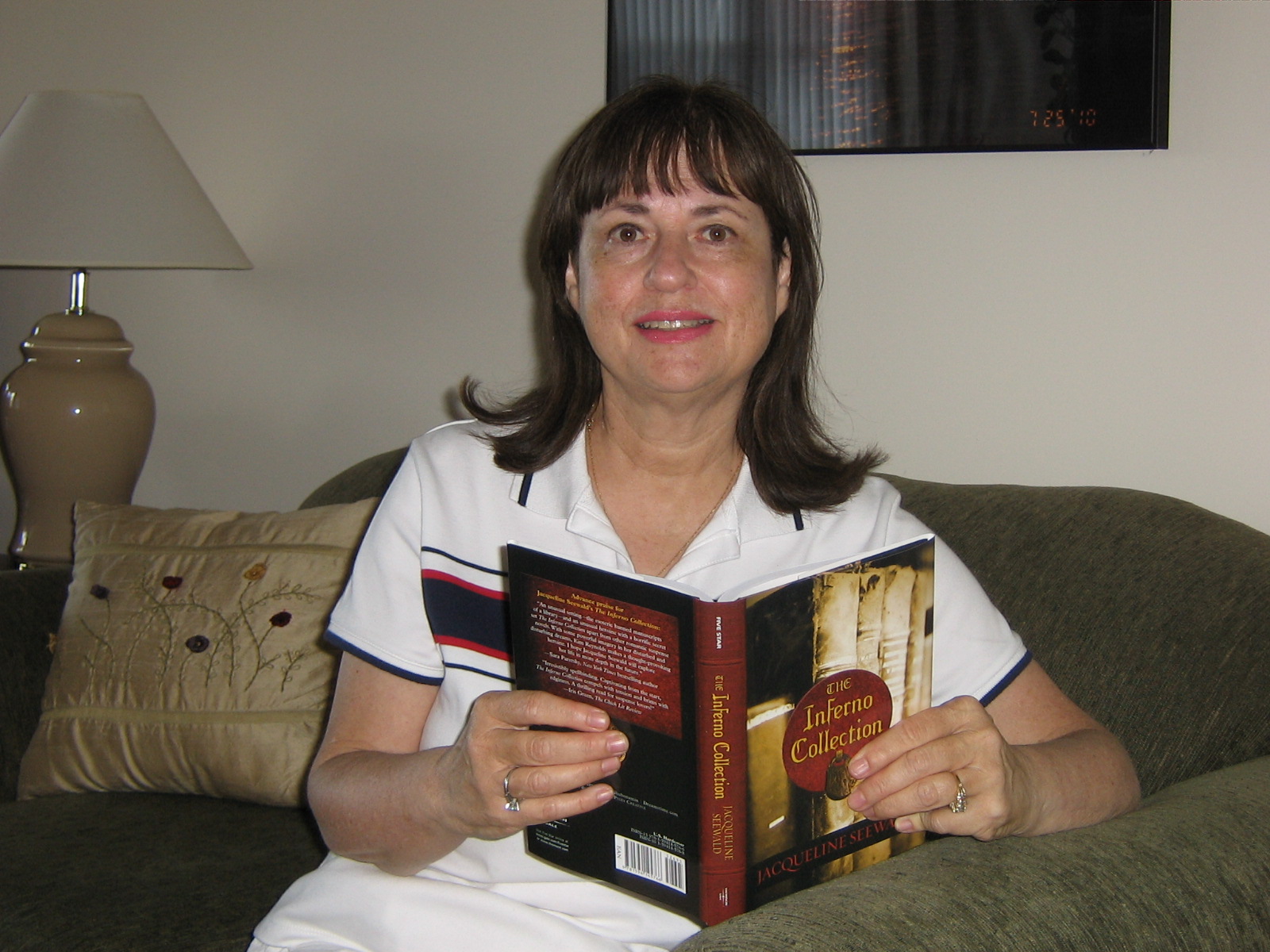
My husband gave me a small point-and-shoot when I left for India in 1999, and said only, “Fill the frame. When you take a picture, fill the frame.” I kept that in mind, and some of my best photographs—including one that was my first sale—were taken with that simple camera and those words in mind. The next year I was using a film SLR.

My relationship to my photography is hard to explain. I enter juried shows and enjoy seeing my work hanging next to the work of far more accomplished photographers. I occasionally sell a photograph, and I find that amusing and pleasing. I very much enjoy putting together exhibits because they allow me to develop a narrative to go along with the photographs. In my heart of hearts, I want to tell a story, and if a series of photographs enables me to do so, then I’m ready.

One of my favorite photographers is Ansel Adams, but as much as I admire his photographs of Yosemite National Park, I have never taken a shot of nature (sans humans) that has ever seemed to have any quality worth noting. To me, in my photographs, trees are just trees. I want people.

But perhaps this slow-to-blossom love of photography runs deeper in me than I have apprehended. A few years ago I started to put the pieces together. When I was cleaning out my mother’s house after her death, I came upon boxes and boxes of photographs—the earliest dating from the Civil War. I didn’t think much of it—after all, my mother’s family lived in upstate New York, near the birthplace of Eastman Kodak. But as someone pointed out to me, most families don’t have quite so many photographs surviving through the years. My family photographed everyone. My grandfather was a photographer, and some of his photographs are better than good. My mother was a photographer, and I have the cases and cases of slides to prove it.

So here I am, following along a family path I never really knew existed until a few years ago. But as I look back at the preceding paragraphs, I can’t help thinking that here again is the drive for narrative. I could have packed this brief essay with photographs (instead of the two I have used), and talked about the nature of the images. But instead I’ve made up a story about family. It’s all about pictures, images, scenes that take us into another life, another way of being in the world. Right now the pictures are found in a glass lens. Perhaps tomorrow they’ll come out of my writer’s eye.

Monday, March 26, 2012

Savvy Secrets of Success


Savvy Secrets of Success: What Do Charles Dickens and Lady Gaga Share?
by Jacqueline Seewald

Charles Dickens and Lady Gaga are examples of celebrities that respectively had and have the ability to build a platform, a brand, that’s hugely successful. Charles Dickens’s novels were vastly popular. Part of that had to do with knowing how to become a literary superstar. Modern day Lady Gaga is also a genius at self-promotion and creating publicity. So what are the secrets to their success? And how can that help the rest of us? What makes Dickens and Gaga so popular and therefore successful?


Dickens was born exactly 200 years ago. He didn’t come from wealth—quite the opposite. He drew upon his childhood experiences to write vivid, memorable scenes. In his youth he wanted to be an actor but worked as a reporter. Later on, he wrote wonderful books—however, he wrote for money. He also wrote for his audience. He cultivated a large readership by providing dramatic readings. And he knew how to merchandise as well, for example, timing “A Christmas Carol” for the holiday season.

As for Lady Gaga, she has also invented herself as a public persona. Her elaborate costumes may be a disguise of sorts but they are part of her creativity. People may want to hear her sing, but they also want to comment on each new outlandish costume creation. No problem for Gaga to write a bestseller if she chooses or call attention to bullying as she has done in launching the Born This Way Foundation.

So what can we learn from these two celebrities in launching our careers? Probably that we need to draw from our own experience of life, to be genuine, to embrace others, talk to people, let them know we exist. Key words are the three P’s: promotion, publicity, and platform.

Here’s a checklist of promotional tools intended to create publicity and build a platform for authors with a new novel:

l. Establish a website.

2. Create a blog.

3. Volunteer to guest blog.

4. Send out news releases.

5. Make public appearances (libraries, bookstores, etc)

6. Get involved in social networking (Facebook, Twitter, Goodreads, etc.)

We may need to think outside the box to be as creative in publicizing our work as Dickens and Gaga. My latest novel DEATH LEGACY, a romantic mystery thriller, is on the launch pad. I am currently offering a Goodreads giveaway of three advance review trade paperback size copies of my novel. (It’s a start!)

http://www.goodreads.com/giveaway/show/22729-death-legacy


Any thoughts or comments are very welcome in this forum.

Sunday, March 25, 2012

Timeless Advice

So sorry reader and writer friends, I missed my blogging date. I'm two days late.Too many things on March's calendar and I never noticed that March has 5 Fridays. I do have some notes to share from a critique partner of long ago.
I was writing my first children's book  and he offered some much needed advice for three areas of my writing which needed help. I believe they are still relevent today.

Offering too much explanation, Using the power position, and Changing tense.
Here's what he had to say:
Offering too much explanation: As Brown and King point out you must Resist the Urge to Explain (RUE). You belabor points and that steals zest from your prose while clobbering your readers with unneeded explanation. Hearts always beat in chests. Nodding is a sign of agreement. You simply don't need to amplify.Not only will this quicken the pace(let's face it, between the explanations and ponderous language, the story moves rather slowly). Leaving out detailed explanation will force your reader to think.  Remember RUE as much as possible.

Using the Power Position: While not every fiction author knows it,books on essays and language point out that every sentence,paragraph, and chapter have a Power Position. A chapter's power position is the last paragraph. A sentence's power position is the last word or phrase before a mark of punctuation.
               "God bless America," cried the bishop.
                The bishop cried "God bless America.
The emphasis is clearly on the the last three words, but we don't want to emphasize "cried the bishop" unless it is meaningful to the story context. It's possible, on sentences that have internal commas to use them as power positions, as well as the sentence's final punctuation mark. Pretty advanced stuff, but someday you'll do it instinctively. Don't juggle phrases and sentences to put everything in a power position. Make flow and readability your first priority, then look for ways to move/sneak important stuff into more powerful positions.

Changing Tense One of my biggest gaffs is changing tense, moving words from past tense to present tense to add immediacy and drama. I'm trying to break myself of the habit and you should too.There are times when the change is acceptable ( according to Janet Burroway,FSU fiction professor, these moments are few and far between), but the shift sometimes works in peak drama: Mary swung back and forth on the thin rope, grabbing at the clif's rock face, trying to arrest the sickening feeling of the free-fall. Most of the time you and I need to keep tense consistent within a sentence.

My critique partner would like that I shared his help to me in this blog.
Mary

Monday, March 19, 2012

The Value of Writer's Conferences

By B.D. Tharp

This weekend was the Kansas Writers Association "Scene" conference at the Wichita Hyatt. Friday night's event was a Pitchapoolsa, and it was unbelievable. Everyone who attended was given one minute to pitch their book. Some of our author attendees were awesome, dramatic, precise, and very well prepared. There are an amazing bunch of stories in the making. And the editors and agents were gracious, encouraging, and positive. Who could ask for more?

Saturday started early, the first speaker began at 8:00 AM. Some of the topics included:

  • Story Structure to Rivet the Reader
  • Ebook and Traditional Publishing, Advantages & Disadvantages
  • Finding the Right Agent or Publisher
  • The Art of the Pitch
  • Promotion, Media, and Branding

Subjects were presented by a host of fabulous industry experts:

I'm exhausted, jazzed, and ready to try the things I learned to better promote my novel FEISTY FAMILY VALUES, and find a home for my next novel, PATCHWORK FAMILY.

Like the cherry on top of the parfait I thoroughly enjoyed the great group of attendees from Kansas and surrounding states. Writers are readers and we know and share in the challenges and joys of being authors. No matter how much your family loves you if they aren't writers, they don't understand the writer's life. It's a bit of a roller coaster ride.

To find out about conferences in your area try Shawguides.com. I usually try to attend one conference a year, and if there are a couple in the Midwest that aren't too far a drive and I can share expenses with someone, then I try for two. They're intense and well worth a writer's time. Write on, my friends.