Pages

Friday, July 20, 2012

Analyzing the Dynamics of a Blockbuster Bestseller By Jacqueline Seewald


Analyzing the Dynamics of a Blockbuster Bestseller
By Jacqueline Seewald

Fifty Shades of Grey by E. L. James is the latest blockbuster bestseller. Women are buying it in droves. What made this initially self-published novel go viral? As a writer and a reader, I’m particularly interested in analyzing the phenomenon that causes certain novels to become instant bestsellers by previously unknown authors. What makes such novels so unique? And in fact, what do they have in common? Over-the-top sex and/or violence? Something so outrageous and/or controversial that it catches the public’s attention and awareness? Perhaps.

I discussed this with a college-educated woman who fits the “Grey” demographic. She showed me how she had the novel set up on her I-pad. She is the mother of three small children, ages seven to two. She works part-time outside the home, is always busy and sleep-deprived. Yet she is finding time to read “Grey.”
I asked her: “What appeals to you about this book?”
She appeared embarrassed by the directness of the question. “I was curious I guess. It’s not my usual taste in books,” she explained with a shrug. “I’m not into S and M. And the book isn’t even well-written.”

Nevertheless, she did pay $10 for the opportunity to read the novel as an e-book.  Others are buying the trade version for $15.95, putting the novel at the very top of that bestseller list along with the other two books in the trilogy and ahead of a Nora Roberts novel.
I also discussed this with an older woman, a respected bank manager who had purchased the novel in print. She told me that she was enjoying the book and had recommended it to several fellow workers. Word of mouth clearly sells books.

Because the novel had gone viral as an e-book, the author was able to get an agent who sold the entire trilogy to a major publisher. The division of prestigious Random House that brought this novel out in print is Vintage Books. Ironically, they claim to focus on publishing “quality literary fiction.” This struck me as particularly interesting since “Grey” has been described as erotica—translation soft porn aimed at female readers. It’s also been noted that the novel degrades women. Is this the average woman’s secret sexual fantasy? Or are women now buying the novel mainly out of curiosity because there has been so much notoriety? Getting publicity seems to be crucial for sales of any novel. The big publishers still have the ability to promote and distribute a novel successfully, something small indy publishers do not.
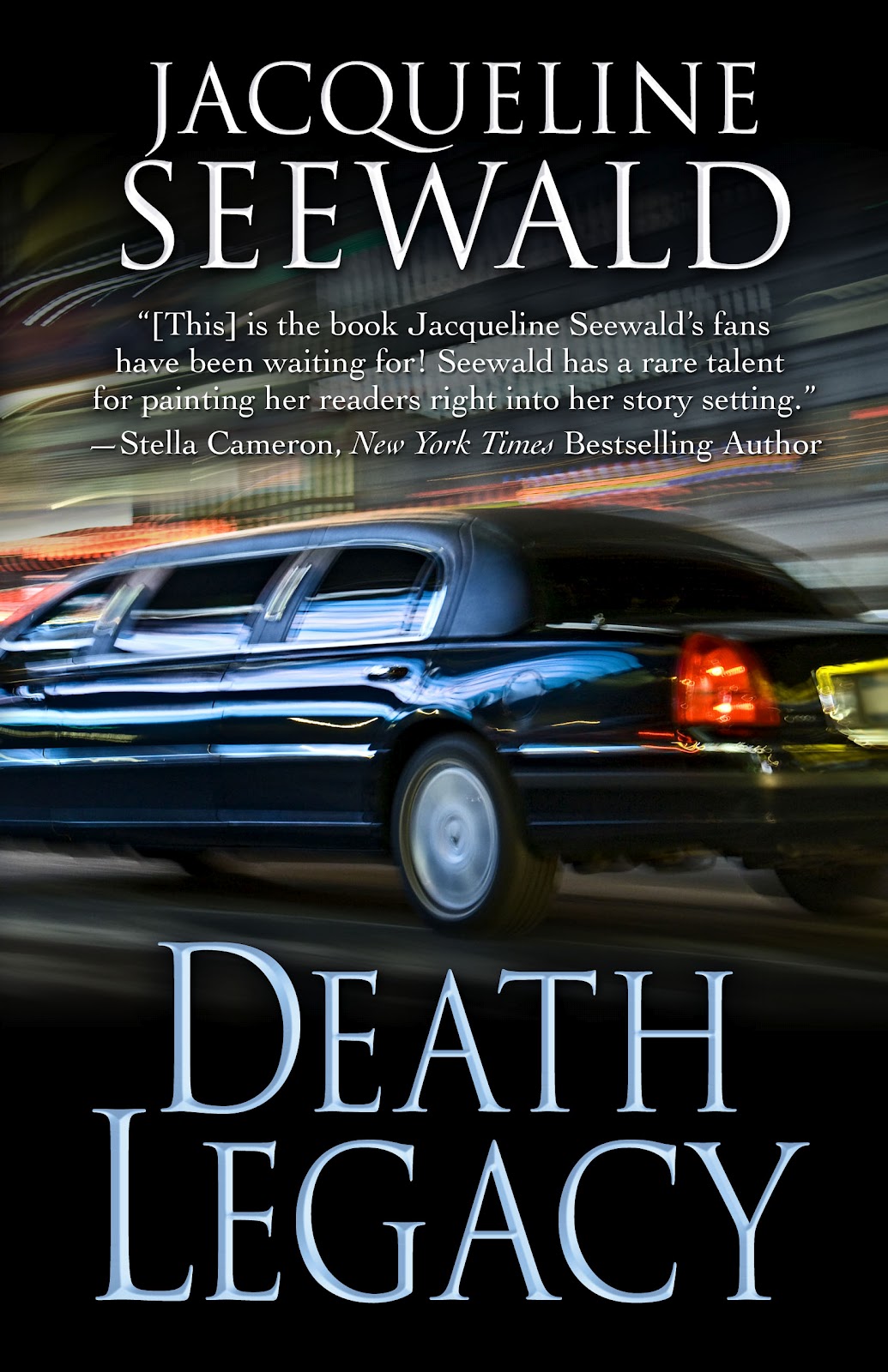
Writing a quality book is something I always have as my main goal. But few know about my novels or read them. My latest novel DEATH LEGACY received excellent reviews from both BOOKLIST and PUBLISHERS WEEKLY. It’s a romantic suspense mystery thriller, and those who have read it said they couldn’t put down. Yet sales are meager. Libraries are apparently reluctant to order it regardless of good reviews. And libraries are the main buyers of Five Star/Gale novels.
 We come back to the initial question. What makes a particular novel stand out so that it sells well to readers? Must it be outrageous? Over-the-top in sex and/or violence? Or are there other reasons?  Is there any way to analyze how to write a bestselling blockbuster? What do readers most enjoy and value in novels? I continue to ponder these questions. Your views, comments and opinions are valued 

Monday, July 16, 2012

Dog Days of Summer

The hottest, most sultry time of year are called "the dog days of summer." I really didn't know why and as a child I just figured it was so hot even your dog didn't want to stay outside. Here's what Wikipedia says: "The Romans sacrificed a brown dog at the beginning of the Dog Days to appease the rage of Sirius (the dog star), believing that the star was the cause of the hot, sultry weather."

Poor dogs! That's just totally unfair.


I admit I'm staying inside most of the day. Except for yesterday when I was running errands and going in and out all day long. Lucy (my dog) and I only walk early in the morning (6:30 a.m. is pretty good). And if it's later in the morning then we scurry to the shaded areas of the side streets, where it's not so bad.

Do you remember the song "Those Lazy-Hazy-Crazy Days of Summer" by Nat King Cole (1963)? That song still pops into my head around June and doesn't leave until September. I think the lyrics went something like "those days of sodas and pretzels and beer." And the photo on the album was kids playing on the beach. Not too many beaches in Kansas, that's for sure, we do enjoy grilling outside and picnics (when it's not too hot).


This doesn't have much to do with writing, except that these kinds of little memories, song lyrics and catch phrases are pretty good scene starters. They invoke feelings, which a good author wants to do, or we won't be successful. I hope you all have a happy, safe summer and enjoy some travel and reading as well.

Nat said he wished "that summer would always be here", and in some ways I do, too. (Don't forget to use sunscreen!)

Friday, July 6, 2012

Giving Advice--No Matter What


Writers' talks are part of the life of a published writer, and they are usually fun. After I get over the anxiety of standing (or sitting) in front of a group of strangers and trying to think of something to say, I usually relax and enjoy myself. But there is another hazard, one that comes after the panel or talk is over. And I'm not talking about selling books.

When my first mystery novel was published, in 1993, I went on a tour through North Carolina and other eastern seaboard states. I enjoyed meeting people and talking about mysteries, and shared my favorite writers. But I was never prepared for the young person who asked for advice because this young person invariably had a parent in tow who had already given said young person advice.

Writing and believing in the power and importance of the written word is part of my DNA. Wherever I go, I see the world in the form of a story taking shape, and I could no more give that up than I could take an oath and then perjure myself on the witness stand. Nor could I suddenly decide to write a different form of fiction because someone else thinks it's a good idea--I write what comes out of me. Sometimes it's good and sometimes it isn't, but it is mine. I think this has to be true for anyone who wants to write or create in any area--painting, sculpting, drama.

After a talk in 1993, a mother came up to me with her daughter who wanted to write mysteries, but the mother felt her daughter should write something else first--literary fiction--and her daughter objected. The mother wanted me to reinforce her view and tell her daughter to write literary fiction. I asked the girl what she liked to read and write. Without any hesitation, it was mysteries. She rattled off a number of names and clearly she was a mystery reader--she read some of my favorite writers. I told her simply, Write what you want to write. There's no other way to be happy as a writer.

The mother glared at me. Okay. The mother's not a writer, and if that young girl is ever going to be her own person as a writer or anything else, she's going to have to listen to her own inner voice. I probably lost one fan that day, but also gained another.

New writers look to more established ones as people who can tell them what they should do, why they're stuck in a hole, what's wrong with this story, how long will it take to succeed, where should they go from here. But those are questions all writers face, and at every stage in their writing careers. Those questions never go away. They might lie in the shadows for a while, but they always come back into the light. As writers we are bedeviled by them. And perhaps that's a good thing. We face questions about our choices day in and day out, and each time these questions come up, we are pushed back onto ourselves, forced to go deeper and find once again confirmation of our choices and commitment to sticking it out, no matter how difficult or dark the times are. Our accomplishments wouldn't mean much if they came easily, or at will.

To any young (or old) writer, my advice is not really different from Shakespeare's: To thine own self be true, and it must follow, as the night the day, thou canst not then be false to any man.

That young girl's mother may have gnashed her teeth when I turned to her daughter and told her to go ahead and writer mysteries, but I can't imagine living with myself if I'd told her anything different.

Susan Oleksiw is the author of two series--Mellingham series featuring Chief of Police Joe Silva and the Anita Ray series featuring the Indian American photographer living in India. Her most recent book is The Wrath of Shiva: An Anita Ray Mystery, the second in the series.


Friday, June 22, 2012

Bits and Pieces....again


If you follow Author Expressions Blogspot you may remember a blog I posted last year titled  Bits and Pieces- Voice and Style. I’m not  resurrecting that blog, but I do choose to use the title again. This time I offer a look at all the Bits and Pieces from life that we use in our writing. Ideas do come from life. Life can provide the warp and woof to weave a tale of historical fiction.


How do we imagine a person who really lived in another era? If you are lucky to have ancestral photographs, you could study the clothing of the people in the photos. Is there an infant wearing a long, white dress with infinite rows of tucks and lace? Can you picture the child’s mother laundering that dress, using starch and a flatiron to make the dress picture perfect? Or would your turn of the century “mother” hire a laundress to do that chore? Finding out how the household was managed can  answer some questions.


I took that direction in researching my first historical novel. I was lucky to find a set of family ledgers. Actually there were three journals of daily family expenditures kept by the matriarch of my children’s paternal great grandparent’s family. Not only did that mother list everyday costs for the butcher, baker, grocer and sundries for the family, but the feed and care of the horses and carriages in the stable, the painters and carpenter’s wages for house refurbishing and the building of out- buildings. She listed fees paid to hardware, and department stores, cost of coal delivery and chimney sweeps, weekly wages of three household help (each by name), church contributions, gifts purchased when, and for whom, weekly commuter train tickets from the suburbs to the city, and vacation shore excursions every summer. All this and more was recorded in a neat and legible hand. Amazing!


It was a treasure trove which presented a way of life from 1897 to 1899!   From the least expenditure of 15¢ for fly paper, to $148.00 for the building of a chicken house, $5.40 for oats, bran, and hay, and the purchase of a buckboard for $45.00. Reading this, my mind’s eye could picture the home, the out buildings and accoutrements of this ancestral family.


Doctor bills,$4.00, bottles and nipples, and a baby carriage with all the “fixins” for $37.00  revealed the month the youngest child was born. Theater tickets at $3.90, a portrait painted for $60.00, country club dues, and children’s private tutors and dance instructors hinted at the cultural milieu they lived in and the values they cherished. In the final year of the ledger, purchases of a Persian Lamb coat for $185.00 and a Coupe Rockaway for $575. signaled the height of the Victorian era they lived in.


These household ledgers were invaluable to me, saving countless hours of research and displaying all the bits and pieces of life which I needed to know about  a family living close to the turn of the century. It helped me write a book with authentic regional flavor and true family dynamics. Perhaps the sharing of my find will point you in  a similar direction. It may be a well worn axiom, but  Ideas do come from life.


Monday, June 18, 2012

Summertime Reads

"Ain't no cure for the summer time blues..." That's a song I remember from way back when and it pops to mind every summer. It's a busy time, in some ways busier than the rest of the year. With kids out of school there is a lot more activity, vacations, yard work, and longer days to cram it all into. You've got a few special days for celebrations with family and friends, like Flag Day, Father's Day, Summer Solstice, Independence Day, and then Labor Day signals that summer is over. Whoa, let's not talk about that one yet.

If you're like me you have a list of things you'd like to get done in the three short months of summer. Maybe some purging and a yard sale? Box up the sweaters and dig out the shorts. Clean the carpets to decrease the allergens. There's always plenty to be done. When I was little I remember "lazy days of summer" where we'd lay by the community pool, ride our bikes after the ice cream truck, eat Popsycles, nap under a tree, chase fireflies and read tons of books.

Summertime isn't the same for adults, we still have jobs, home repairs and upkeep (mowing), cooking, cleaning and laundry. But for a couple of days or weeks we usually try to recapture those summer days we had as a child. If your status as an adult this summer makes you sad, escape in a good book. Every summer publishers launch a handful (or more) "beach reads" that are light and fun. I LOVE CONSUMING A GOOD SUMMER READ! Personally, my reading will consist of nothing too heavy/intense for the next couple of months, just good old fashioned entertainment, escapism, and fun. There are two beach reads sitting on my desk, calling my name, but I'm halfway through a science fiction novel a friend loaned me - so that one comes first. I've been known to read more than one book at a time. Do you? Sometimes, however, I really want to focus on the world of one story. Have fun this summer, be safe, and don't forget to READ. 

http://bdtharp.com

Friday, June 15, 2012


Interview with Mystery Writer Fred Lichtenberg
By Jacqueline Seewald

Fred Lichtenberg is a native New Yorker who lives with his wife in Jupiter, Florida. His second novel, Double Trouble, will be released in June 2012. Hunter’s World, Fred’s first mystery set on New York's Long Island, was released by Five Star/Cengage in May 2011.
 In addition to writing mystery novels and short stories, Fred wrote and produced a one-act play titled The Second Time Around … Again, a comedy about finding love in a nursing home, presented at the Lake Worth Playhouse. Fred is a member of Mystery Writers of America and the International Thriller Writers.

 Question: What is the genre of your novel?  Why did you select it?

Answer: I’m a mystery writer. It’s what I mostly read over the years so it was an easy decision to write that genre once I got the bug to write. I also have a bit of comedy in my DNA so humor is always sprinkled into my books. 

Question:   What inspired this novel? How did it come about?

Answer: I enjoy writing about flawed characters and this book is no exception. My stories are psychology driven, so the genesis of Double Trouble deals with characters running away from reality. I’ve been intrigued with twins especially identical twins separated at birth? While their DNA is the same, different environmental backgrounds can make their personalities quite different. In Double Trouble, mistaken identity is the underlying theme that moves the story along.

Question:  Could you tell us a little bit about the heroine and/or hero of your latest novel?
                                                                                                                 
Answer: Charlie Quinn is a washed-out detective (defective detective) from Fort Lauderdale. He’s lived a painful life, has known betrayal, deceit and quite honestly, has little going for him until by chance, he runs into his twin in a Fort Lauderdale parking lot. His twin, Frankie Marcone, is a happy go lucky hit man for the mob but doesn’t have time for a family reunion and bolts. It seems Marcone stole diamonds from his boss and is planning a long vacation. Quinn won’t take no for an answer and attempts to track Marcone down only to become enmeshed in Marcone’s dark world. The boss wants his diamonds back!

 Question:   Can you tell us about some of your other published novels?

Answer:  Hunter’s World was my first published novel. It takes place in a small town on Long Island. The chief of police is investigating the only murder his town has known and the evidence (compromising positions displaying the victim and some of the women), if went public, could cripple the town’s moral foundation. The protagonist must balance his position as a police officer with the love of his town. The more he pushes for justice the more someone behind the scenes is pushing to have him evicted from his office.

I published a short story in February called 666 Kendall Drive, a horror/humorous story of how one man’s investment in the rental real estate market can go terribly wrong. It takes place in South Florida, where else?
  
Question:   What are you working on now?

Answer:  I just completed the first draft to Good Luck Bad Luck, a Carl Hiaasenesque theme that includes Medicare fraud, pill mills, Ponzi schemes and infidelity. And, of course, murder. It takes place in South Florida. My two main characters include an eighty year old woman, street smart, and a forty something ex-con. It was great fun to write.
Then there is Murder 1040. It’s about what happens to an IRS agent when he uncovers fraud, money laundering, and drugs during an audit. Murder will be published next year.

Question:   What made you start writing?

Answer: I always believed I was a good story teller. After reading mysteries for years, I started dabbling. I began with short stories, and while taking a creative writing class, I wrote a mystery short story. It was well-received and provided the encouragement to continue.

Question:  What advice would you offer to those who are currently writing novels?

Answer:  Writers tend to give the same advice to aspiring novelists. Of course, I’ve added my two-cents. But I can’t emphasize enough that one must have a passion and discipline for writing. That first, then take creative writing courses, read the genre you’re interested in and locate a writers group in your hometown. Then write, write, write!

Question:  Where and when will readers be able to obtain your novel?

Answer: Double Trouble will be available around June 15th. I decided to publish this novel through Amazon’s Create Space and Kindle. It will be available in both soft cover and e-book version. In addition, Hunter’s World, which was previously only in hardcover, will also be available on Amazon’s Kindle at the same time. By the way, the reader doesn’t need a Kindle device to read books from Amazon. Any e-device will work. 

Fred, thanks so much for being our guest today at Author Expressions. Comments are welcome in this forum.

Friday, June 1, 2012

The Good Panelist


I've been invited to join a Beach Reads panel in July, where with a number of other Sisters in Crime (from New England) I'll talk about two books to enjoy over the summer. As soon as I was asked, I headed to the library (my favorite place) to browse through the new books section. It always looks like most of the fiction is crime fiction, so I had lots of choices. I picked one, then two, then realized I had five books in hand and I hadn't even gotten through the letter B, so I kept going and found five more before I got to letter E. Really, I could just move into the library and be happy. I began putting the books back and tried to be more discerning--or at least less greedy. I wanted to read everything.


And that was the point. The panelists are expected to talk about the books they've selected, so members of the audience will be able to make appropriate choices. So we're expected to read the books too. Seems obvious?


Being a good panelist is about more than just showing up on time, though that's certainly part of it. The good panelist comes prepared. If I'm invited to be on a panel, I want to have an idea of what it's going to be about so I can respond appropriately. Some moderators send out questions in advance, and others just give a vague idea for topics to be covered. No matter how it's done, anyone who is going to be on a panel should come prepared.


First, know the topic and even if it's vague (Where do you characters come from? Where do you get your ideas?), think about what you will say and have a few stories in mind that will illustrate your position. Don't count on inspiration striking just as you're sitting down at the table or heading to the microphone.


Second, get to know your fellow panelists. If you're on a panel with other writers whose names and books are unfamiliar to you, head to the library or Google and learn about your fellow panelists. Do you share a love for cozies or cats or hiking? Do you come from the same part of the country, or have similar day jobs? The more you know about your fellow panelists, the greater the likelihood that conversation among panelists will have greater depth.


Third, let the moderator moderate. I've only been on one panel that I can recall where the moderator dropped the ball repeatedly by failing to ask obvious questions or direct questions from the audience to the appropriate panelist. Most moderators take their tasks very seriously and prepare questions, read the panelists' books, and come ready to move the event along.


Fourth, remember that you are one of a group. No matter how scintillating your stories, no matter how much your agent is pushing you to get out there, no matter how wonderful your voice sounds over the microphone, you are one of a group and everyone should get the same amount of time and attention. I recently attended a talk by two writers--one older and well established, and nationally known, and the second a newcomer who was very competent but very young. The younger one talked and talked and talked, and the older one listened attentively. Her graciousness won me over (even if her writing hadn't done so already), and I will remember her as one of the most generous writers I've encountered. She even read a passage by the younger writer to illustrate a point she wanted to make.


Panels are fun, and they're especially satisfying when each panelist comes away feeling they've been well treated by the moderator and other panelists, and that comes from everyone doing his or her homework.  I'm starting mine this weekend, reading the two books I've selected for the Beach Reads panel in July in Newburyport. Which books did I pick? I chose two:

Never Tell a Lie by Hallie Ephron
A Double Death on the Black Isle by A. D. Scott


And, of course, I get to promote my new book: The Wrath of Shiva: An Anita Ray Mystery.