Pages

Showing posts with label The Chevalier. Show all posts

Friday, July 11, 2014

Summer Reading Suggestions by Jacqueline Seewald

I opened several of my magazines (yes, we actually do still subscribe to print publications at our house!) and low and behold there were all these wonderful articles on the best books for summer reading. With people going on vacation, sitting at beaches, pools and on cruise ships, many individuals enjoy relaxing with a good book. And there certainly are a lot of them being published.

Most of the suggestions I see are for books written by famous people or authors. Books from the “big” publishers dominate these suggested summer reading lists—no surprise there! But what about those of us who are published by small independents? Should our books be ignored by the reading public? Emphatically no!

It is my intention to give other writers an opportunity to mention their own books on this blog. I would also like readers to recommend reading what you’ve enjoyed. Word of mouth matters.

I’ll start by recommending my own recent books which have been well-reviewed:

The fourth Kim Reynolds mystery was published by Perfect Crime Books April 2014. It is available both in print and e-book editions. http://www.amazon.com/dp/B00J6PCKVW
(The three previous novels in this series received excellent reviews. The Harlequin Worldwide Press paperback editions which followed the hardcover and large print editions are now all sold out.)

My Regency novel TEA LEAVES AND TAROT CARDS received an excellent blurb endorsement from Jayne Ann Krentz/Amanda Quick which appears on the cover of that novel, published both as a hardcover from Five Star/Gale and in large print from Thorndike Press. Mary Balogh also read this novel and offered helpful editorial suggestions prior to publication. SteameReads published this novel in a newly edited e-book format as well. http://www.amazon.com/dp/B00JFHMXWW

I won SteameReads “Some Like It Hot” romance novel writing contest with my sensual Georgian romance THE CHEVALIER. That novel was also published and is available in all e-book formats. http://www.amazon.com/gp/product/B00GY95RTU/


My “clean read” YA novel THE DEVIL AND DANNA WEBSTER was also recently published as an e-book in all formats by Astraea Press. This YA novel is a good reading experience for mothers and daughters to share. It’s not just for teens. http://www.amazon.com/Devil-Danna-Webster-Jacqueline-Seewald-ebook/dp/B00JZYXW7K/


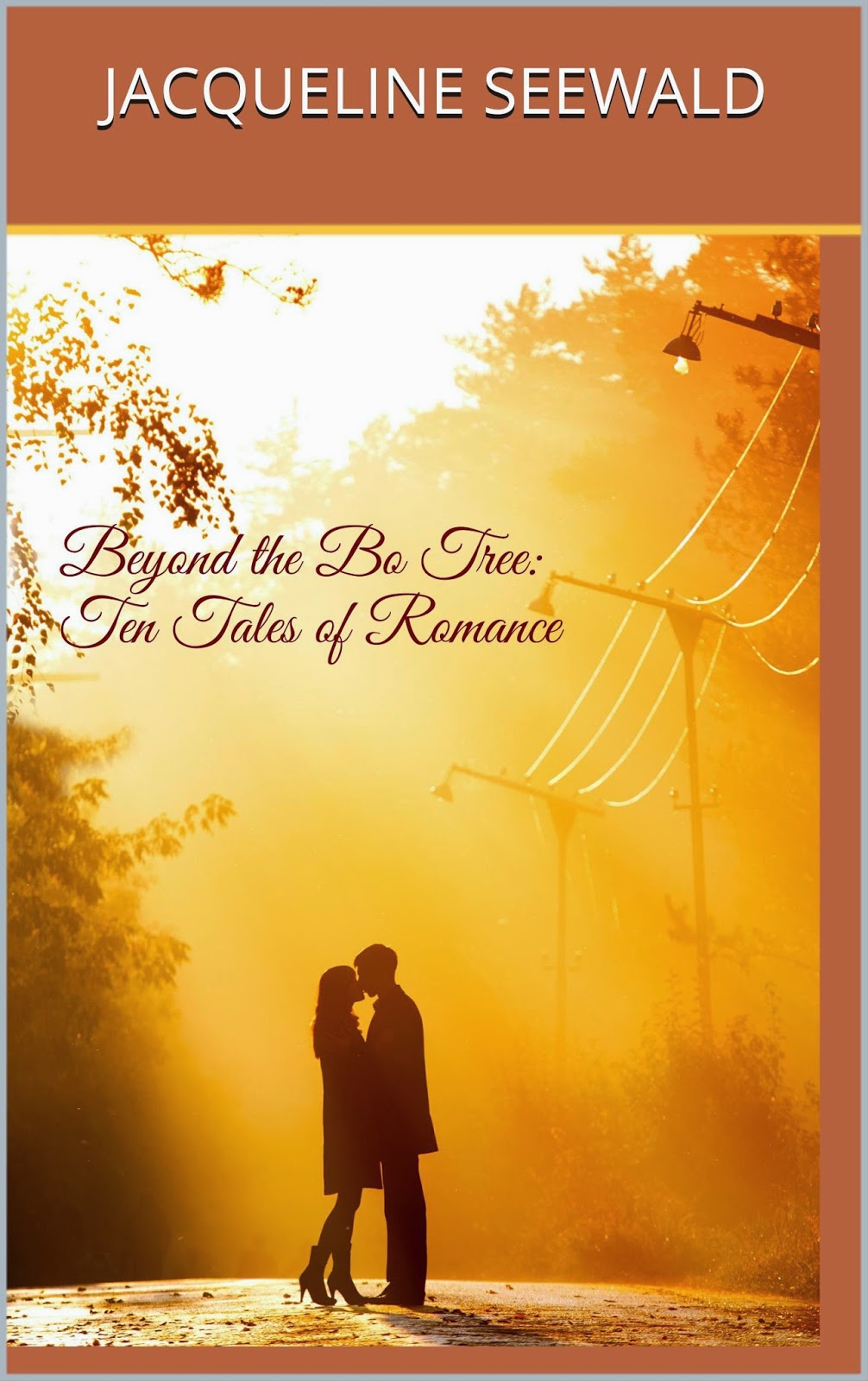
Finally, I will mention my book of short stories, BEYOND THE BO TREE, published as an e-book by Authentic Press. http://www.amazon.com/dp/B00DTV0750
I’ve collected together some of my best diverse stories for reader enjoyment.

Okay, now here’s your opportunity to share the books you think will make for good summer reading. Don’t be shy! Comments/suggestions are welcome here.


Friday, May 9, 2014

“Mashup”: The Future of Fiction? by Jacqueline Seewald

In 2009, the term “mashup” came into being. Mashup simply defined means taking two or more different genres and mixing them up. For instance,  Abraham Lincoln: Vampire Slayer and Pride and Prejudice and Zombies, both by Seth Grahame-Smith, are good examples of mashup novels that take either historical figures or classic literature and combine them with horror. This form of hybrid work brings up intriguing questions regarding the future of fiction. Is this form of cross genre a good thing or is it merely pop culture at its worst? Short story writers have been combining genres for many years. Thus, the “speculative” fiction label often combines science fiction, fantasy and horror with  mystery, romance, historical and even literary elements. So this is not new.

 However, reviewers as well as readers are often confused when authors move away from pigeon-holed tried and true formulas for genre novels and experiment. Charlaine Harris, for example, tossed aside the usual rules of mystery writing and simply wrote what she really wanted to create--the secret to her superstar success. She wasn’t afraid to be different in style and subject and actually have fun with her writing. “Old school” mystery reviewers and writers frown on using paranormal elements. They consider it a kind of cheating. Charlaine didn’t worry about that. The results speak for themselves.

Kim Reynolds, my psychic detective in four mystery novels, tries her best to repress this ability but it keeps showing up and helping her uncover murderers. My mystery series is also strong on romance which is another no-no in old school mystery circles. But I look at novel writing as a dynamic, growing literary form. So I’ve been somewhat daring with it. This is also true in my romance novels as well. My heroes, for example, in my historic romances THE CHEVALIER and TEA LEAVES AND TAROT CARDS are not paragons of virtue. They’re alpha males, strongly masculine but decidedly flawed. In my short fiction I often mix genres and write a combination of elements. In my recently published YA novel, THE DEVIL AND DANNA WEBSTER, I combine paranormal elements with everyday teen life, mixing reality and fantasy. In TEA LEAVES AND TAROT CARDS, elements of the supernatural are combined with Regency romance, historic elements and people of those times.

In the 18th century, many authors experimented with novel writing, considering it a dynamic form of written expression. The writers weren’t afraid to be original or different. They created unique novels with unforgettable characters such as: CLARISSA, TOM JONES, ROBINSON CRUSOE, GULLIVER, JOSEPH ANDREWS, PAMELA, MOLL FLANDERS and my favorite, TRISTRAM SHANDY. There was diversity in character, style and plot type which inspired subsequent generations who followed. The mashup novel is yet another experiment with the novel form. Will this manifestation last? To my mind, that is not the significant question. Will the novel survive as a literary form? I think the answer is emphatically yes because it is an art form that allows for change and constant evolution.

Do you take chances as a reader or a writer? Will you read or write books or short stories that do not follow standard genre formula plotting and characterization?

To celebrate Mother’s Day, I’m giving away a review print copy of my mystery thriller THE BAD WIFE to someone who comments. If interested, leave an e-mail address along with your comment.


Friday, January 10, 2014

Writing Contests: Enter or Avoid? By Jacqueline Seewald

I've entered a number of writing contests over the years. Some were worth the effort, some were not. 
Some I won, some I didn’t. On a positive note, winning writing contests can provide recognition for writers. However, I discovered that I could be cheated if I wasn't careful. There are some smooth operators out there. Their scams are likely not illegal, but they are still to the detriment of writers.
Most writing contests these days cost money to enter. Some of them ask quite a lot of money. So naturally it’s wise to be wary. But even some of the “free contests” aren’t really what they seem to be. You must read the contest rules and fine print with care.
Some “free” contests promise to put your work in an anthology. All you have to do is buy the anthology. Some poetry and short story contests on the web offer a prize for the best work. The catch? They reserve the right to archive your work in perpetuity regardless of whether or not you have won the contest. So you will never be able to sell that story or poem for first rights. And chances are no one will accept it even as a reprint since it's now out there for free on the Internet. This kind of contest is just a scam for a site to obtain free content—your content! So read those rules carefully before you decide to submit your work.
Be aware that you need a statement as to how long a site intends to archive your work. Again, if it's in perpetuity, you are out the reprints. And reprints can be lucrative. Even print publications may insist on internet rights and display your work for all to see. Make certain archiving rights are limited and that you have it in writing.
With so many contests out there, try to submit your work to publications that have been established for at least several years. Many publications come and go, often folding before you even receive payment for your winning work.
You’ve won a book writing contest? Great! But book contracts can be tricky. The publisher may demand all sorts of rights. Try to limit what you give away. For example, if the publisher only does e-books, you shouldn’t be signing away audio and print rights. If you can afford it, have a lawyer familiar with intellectual property rights look the contract over for you.
The best thing at this point is to contact a literary agent. Have another book ready for consideration. Then it may be possible to have a literary agent represent you, but be aware that the reputable ones are often harder to obtain than publishers. The key here is to make certain that money is coming to you, not the other way around. Never, ever pay an agent or publisher a cent up front. Legitimate agents take a percentage, usually 10 to 15 percent of what you will earn. Always remember that money must come to you as the author and not the other way!
     Another thing to check for, make certain that there is a time limit as to how long the publisher can hold your book without publishing it. After two years without publication, you want the rights to revert back to you.
I will share with you some good news regarding a recent writing contest. I was one of the winners of an Australian publisher’s romance writing contest receiving generous prize money paid upfront. It was not an advance against royalties. THE CHEVALIER is an historical romance set in Georgian England. I’m also happy to say that the novel is now available on Kindle at a reasonable price:
and also available in all ebook formats from the publisher:

Obviously, there are still some good free contests out there for writers to enter!
For legitimate writing contests that don’t
charge fees, I have found some helpful 
listings. Here are a few to examine: 
 
 http://www.writing-world.com (offers a 
free monthly newsletter with all sorts of valuable info including contest listings)
 
http://www.erikadreifus.com/newsletter/current/ (another valuable monthly newsletter with a free subscription)
 
http://winningwriters.com/newsletter/public/2013/nl_public_1311.htm#.UoakPnCTiu0 (regularly lists free contests and rates them)

(lists freelance jobs and lots of free international writing contests)

THE WRITER offers a mixture of fee and non-fee contests:

The following websites provide warnings or discussions of ways in which writers may be scammed:
SFWA's Writer Beware: http://www.sfwa.org/beware/
Preditors & Editors: http://www.anotherealm.com/prededitors/
What’s your opinion on this subject? What experiences have you had with writing contests? Do you intend to enter writing contests or avoid them?